



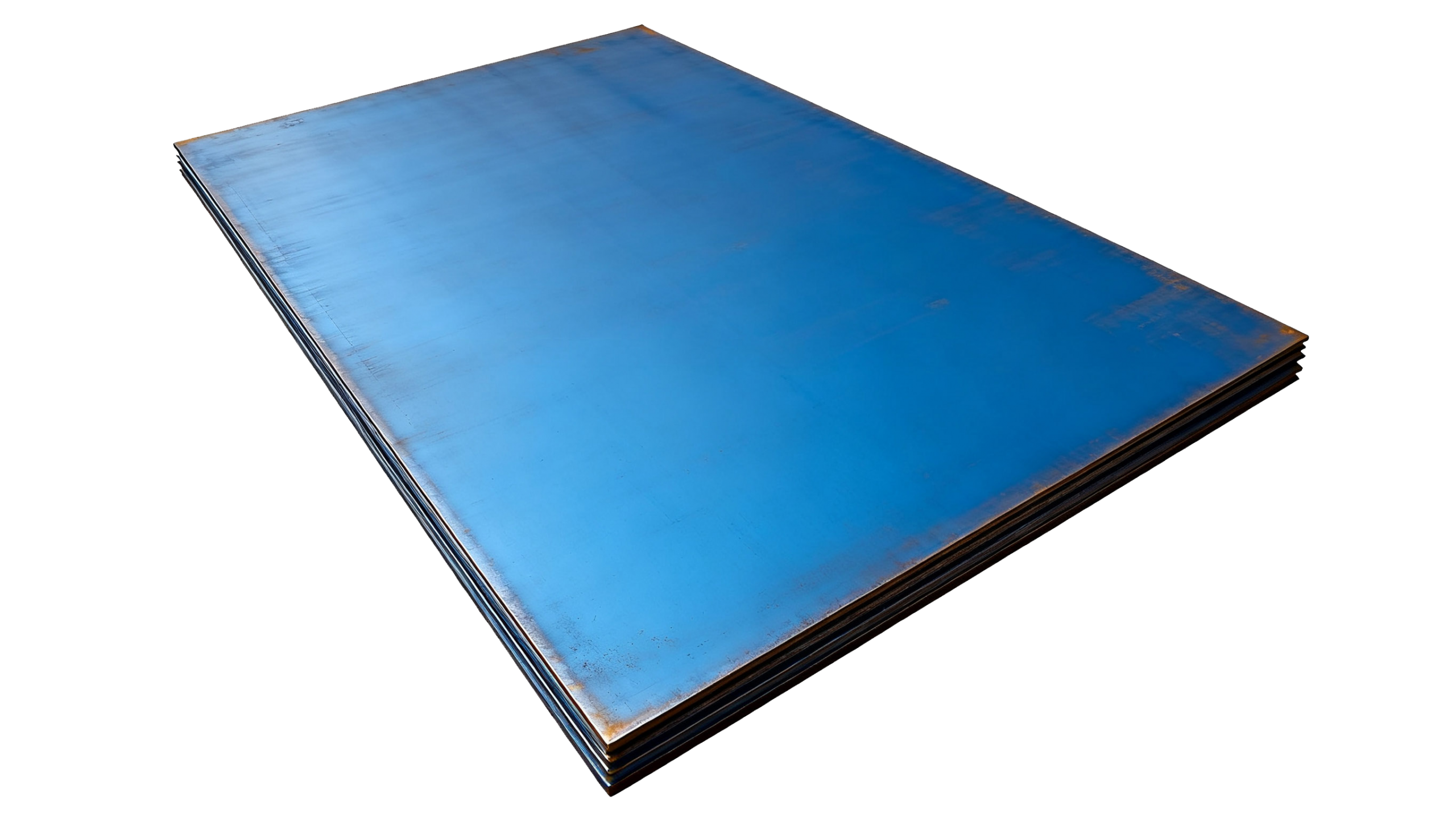
Boiler and pressure vessel steel plates
Product Application: Drum, superheater tube sheet, economizer, furnace shell, storage tank, reactor, heat exchanger, separator, cryogenic storage tank, hydrogenation reactor, nuclear power auxiliary equipment, etc., which require high temperature and high pressure resistance.
Delivery conditions:The goods can be delivered under various conditions, such as hot rolling, normalization, tempering, quenching, N+T, T+Q, etc. Z15-Z35 can also be provided.
Specifications & Standards:Refer to the table below
Consultation Hotline: 0086-371-55023661
| Category | Details |
|---|---|
| Executive Standards | International Standards: ASTM A516/A516M (Carbon Steel), ASTM A387/A387M (Chromium-Molybdenum Alloy Steel), EN 10028-2 (European Standard)Domestic Standards: GB/T 713-2014 (For Boilers), GB/T 3531-2014 (For Low-Temperature Pressure Vessels), GB/T 19189-2011 (Chromium-Molybdenum Alloy Steel) |
| Common Grades | A516 Gr.60/70, A387 Gr.11/22/91, GB 20g/25g, Q345R/Q370R, 15CrMoR, 09MnNiDR |
| Specification Range | – Thickness: 6 – 300 mm (thick plates ≥ 60mm require Z-direction performance Z15/Z25/Z35)- Width: 1500 – 4800 mm; Length: 3000 – 18000 mm (fixed-length tolerance ±5mm)- Delivery Form: Hot-Rolled plate, Normalized (N) plate, Normalized + Tempered (N+T) plate, Quenched & Tempered (Q+T) plate (high-grade steel), Thermo-Mechanically Controlled Processing (TMCP) plate |
| Chemical Composition (Typical Grades, %) | – A516 Gr.70 (Carbon Steel): C ≤ 0.31, Si 0.15-0.40, Mn 0.85-1.20, P ≤ 0.035, S ≤ 0.035- A387 Gr.22 (Cr-Mo Alloy Steel): C ≤ 0.15, Cr 2.00-2.50, Mo 0.90-1.10, P ≤ 0.035, S ≤ 0.035- Q345R (Domestic Vessel Steel): C ≤ 0.20, Si 0.20-0.60, Mn 1.20-1.60, P ≤ 0.030, S ≤ 0.020- 15CrMoR (Heat-Resistant Alloy Steel): C 0.12-0.18, Cr 0.80-1.10, Mo 0.40-0.55Core Requirements: Carbon Equivalent (CEV) ≤ 0.45% (ensures weldability), low sulfur and phosphorus (resists hydrogen-induced cracking) |
| Mechanical Properties (Room Temperature) | – Yield Strength (σs): A516 Gr.70 ≥ 260MPa, A387 Gr.22 ≥ 205MPa, Q345R ≥ 345MPa, 15CrMoR ≥ 315MPa- Tensile Strength (σb): A516 Gr.70 485-620MPa, A387 Gr.22 415-585MPa, Q345R 470-630MPa- Elongation (A5): ≥ 21% (all grades)- Impact Energy (Akv): A516 Gr.70 (-29℃) ≥ 27J, 09MnNiDR (-70℃) ≥ 27J, 15CrMoR (20℃) ≥ 34J- Hardness: ≤ 187HB (annealed state); ≤ 229HB (normalized state) |
| Heat Treatment State | – Carbon Steel (A516/Q345R): Normalized (880-920℃ air cooling); tempering required for thick plates to eliminate internal stress- Cr-Mo Alloy Steel (A387/15CrMoR): Normalized + high-temperature tempering (620-700℃ air cooling) for grain refinement and improved heat resistance- Low-Temperature Vessel Steel (09MnNiDR): Normalized + tempered (580-620℃) to ensure low-temperature toughness- Core Requirement: No bainite structure; grain size ≥ Grade 5 |
| Processing Adaptability | – Welding: Preheating to 80-200℃ (thickness > 20mm); use low-hydrogen electrodes (e.g., E7018, E8018-B2); post-weld stress relief heat treatment (600-650℃)- Cutting: Flame cutting (thick plates), plasma cutting (medium-thick plates), laser cutting (thin plates); preheating required for thick plates before cutting to prevent cracking- Forming: Cold bending radius ≥ 1.5× plate thickness (avoids lamellar tearing); supports rolling and pressing of hemispherical heads- Surface Treatment: Factory-supplied with anti-rust primer (custom anti-corrosion coatings available) |
| Applicable Working Conditions | – Temperature Range: Carbon Steel (-29℃~450℃), Cr-Mo Alloy Steel (-20℃~600℃), Low-Temperature Steel (-70℃~350℃)- Pressure Range: Design pressure ≤ 10MPa (Carbon Steel), ≤ 20MPa (Cr-Mo Alloy Steel); A387 Gr.91 required for ultra-high pressure- Medium Compatibility: Steam, hot water, oil, natural gas, chemical media (low-sulfur grades required for acidic media) |
| Application Fields | – Boiler Equipment: Boiler drums, superheater tube sheets, economizers, furnace liners (20g, A516 Gr.70)- Pressure Vessels: Storage tanks, reactors, heat exchangers, separators (Q345R, A387 Gr.22)- Special Scenarios: Low-temperature storage tanks (09MnNiDR), hydrogenation reactors (A387 Gr.22/91), nuclear power auxiliary equipment (15CrMoR) |
| Inspection Requirements | – Routine Testing: Chemical composition analysis, tensile test, impact test (including low-temperature), bending test, hardness test- Non-Destructive Testing (NDT): Ultrasonic flaw detection (ASTM A578/GB/T 6402 Level B, 100% full coverage); magnetic particle/penetrant testing supplementary for thick plates- Special Testing: Hydrogen-Induced Cracking (HIC) test (acidic working conditions), high-temperature creep test (working conditions ≥ 450℃)- Certificate Requirements: EN 10204 3.2 material certificate, ASME U Stamp (international projects), third-party test report (SGS/BV) |
| Core Characteristics | – Safe Pressure-Bearing Capacity: High yield strength + good toughness to resist alternating pressure impact- Heat Resistance & Creep Resistance: Cr-Mo alloy forms a dense oxide film, minimizing deformation under long-term high temperature- Welding Safety: Low carbon equivalent design with low welding crack sensitivity- Corrosion Resistance: Low sulfur-phosphorus + alloying (Cr, Mo) for resistance to hydrogen corrosion and pitting |
Friend links:HENAN STEEL GUANG INTERNATIONAL TRADE CO., LTD.







Global Hotline: 0086-371-55023661 Email: info@steelguang.com
Copyright © 2019 HENAN STEEL GUANG INTERNATIONAL TRADE CO., LTD.
Global Hotline:0086-371-55023661
Copyright © 2019 HENAN STEEL GUANG INTERNATIONAL TRADE CO., LTD.