



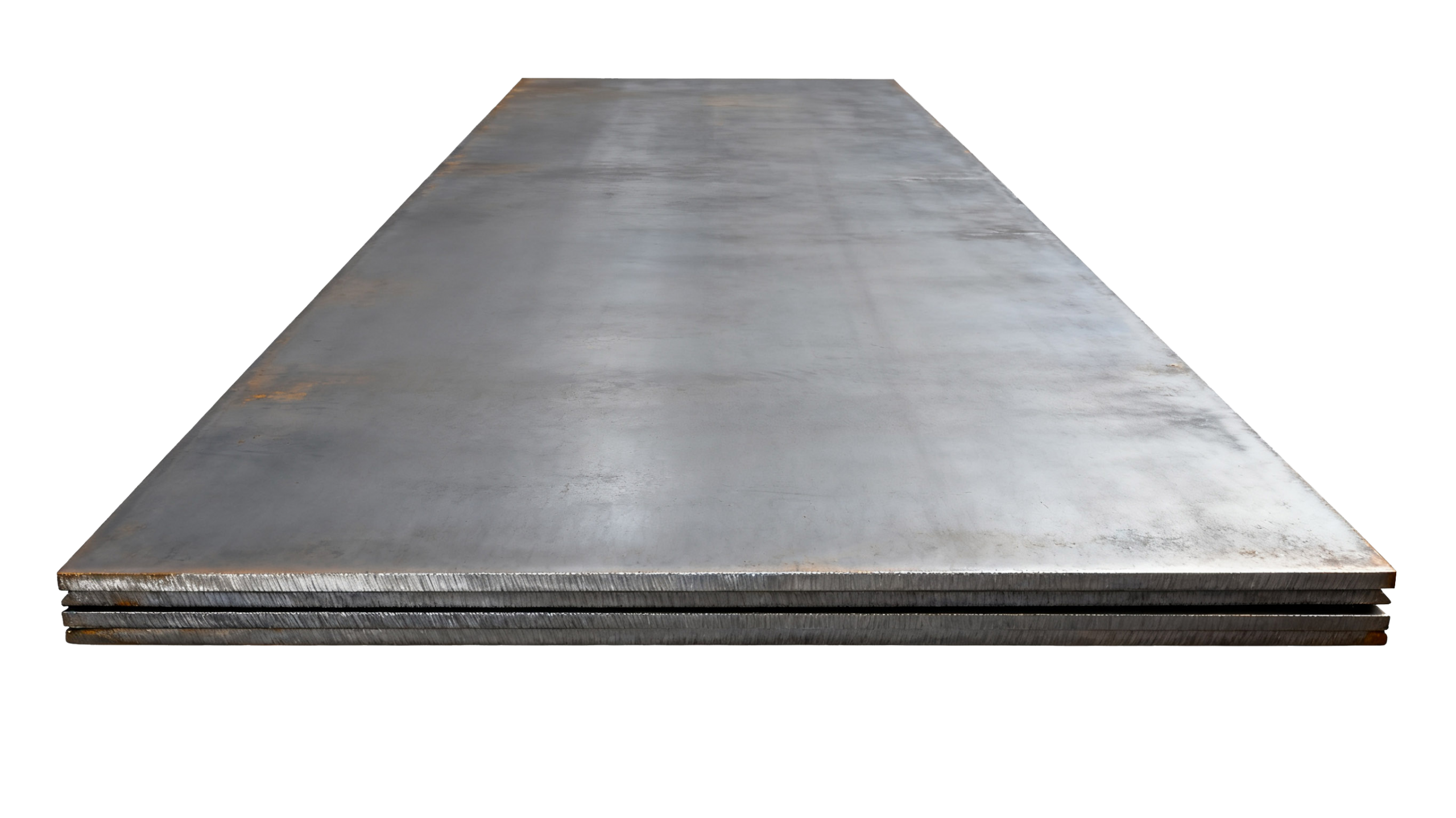
ASTM A387 ASME SA387 steel plate
Product Application: Boiler superheaters, reheaters, economizer tube sheets and headers, hydrogenation reactors, reforming units, cracking furnace tube supports (capable of withstanding high temperature, high pressure, and hydrogen containing environments), thermal/nuclear power boiler pressure vessels, steam pipeline flanges, high-temperature flues, waste heat boilers, and other heat-resistant and pressure bearing structures
Delivery conditions:The goods can be delivered under various conditions, such as hot rolling, normalization, tempering, quenching, N+T, T+Q, etc.
Specifications & Standards:Refer to the table below
Consultation Hotline: 0086-371-55023661
| Category | Details |
|---|---|
| Executive Standards | ASTM A387/A387M-22, ASME SA387/SA387M |
| Common Grades | 11, 12, 22, 22L, 91, 911 |
| Specification Range | Thickness: 6 – 150 mm (thick plates must meet flaw detection requirements) Width: 1000 – 3000 mm Length: 1000 – 20000 mm (custom sizes negotiable) Delivery Form: Steel plate, cut-to-size plate, flaw detection plate (provided on demand) |
| Chemical Composition (%) (Melting Analysis) | Grade 11 (1.25Cr-0.5Mo): C ≤ 0.15, Si 0.50-1.00, Mn 0.40-0.70, P ≤ 0.035, S ≤ 0.035, Cr 1.00-1.50, Mo 0.44-0.65 Grade 12 (1Cr-0.5Mo): C ≤ 0.15, Si 0.15-0.40, Mn 0.30-0.60, P ≤ 0.035, S ≤ 0.035, Cr 0.80-1.10, Mo 0.45-0.60 Grade 22 (2.25Cr-1Mo): C ≤ 0.15, Si 0.50-1.00, Mn 0.40-0.70, P ≤ 0.035, S ≤ 0.035, Cr 2.00-2.50, Mo 0.90-1.10 Grade 22L (Low Sulfur): S ≤ 0.010, others same as Grade 22 Grade 91 (9Cr-1Mo-V-Nb): C 0.08-0.12, Si 0.20-0.50, Mn 0.30-0.60, P ≤ 0.020, S ≤ 0.010, Cr 8.00-9.50, Mo 0.85-1.05, V 0.18-0.25, Nb 0.06-0.10 |
| Mechanical Properties (Normalized + Tempered State) | Grade 11/12/22:- Tensile Strength: ≥ 415 MPa Yield Strength: ≥ 205 MPa (thickness ≤ 100mm); ≥ 170 MPa (thickness > 100mm) Elongation (A5): ≥ 22% Impact Energy (20℃): ≥ 41 J (Charpy V-notch)Grade 91: Tensile Strength: 620 – 795 MPa Yield Strength: ≥ 415 MPa Elongation (A5): ≥ 20% Impact Energy (-10℃): ≥ 47 J |
| Heat Treatment State | Normalizing: Grade 11/12/22 at 900-980℃ air cooling; Grade 91 at 1040-1080℃ air cooling / forced cooling Tempering: Grade 11/12/22 at 620-705℃ air cooling; Grade 91 at 730-780℃ air cooling Core Requirement: Ensure grain refinement, eliminate internal stress, enhance high-temperature stability |
| High-Temperature Performance (Key Indicators) | Grade 22: Tensile strength ≥ 150 MPa at 600℃; Creep Rupture Strength (10⁵h) ≥ 45 MPa Grade 91: Tensile strength ≥ 200 MPa at 650℃; Creep Rupture Strength (10⁵h) ≥ 80 MPa Applicable Temperature Range: Grade 11/12 (≤ 550℃), Grade 22 (≤ 600℃), Grade 91 (≤ 650℃) |
| Processing Technology | Welding: Preheating to 200-300℃ required; use low-hydrogen electrodes (e.g., E8018-B2); post-weld tempering at 650-700℃ for stress relief Cutting: Flame cutting (thickness > 10mm), laser cutting (thickness ≤ 20mm); preheating required for thick plates to prevent cracking Machinability: Good in annealed state; hardness increases after quenching & tempering (200-250 HB); cemented carbide tools recommended |
| Application Fields | Boiler Equipment: Superheaters, reheaters, economizer tube sheets, and headers Petrochemical Industry: Hydrocracking reactors, reformers, cracking furnace tube supports (resist high-temperature, high-pressure hydrogen-containing environments) Power Industry: Thermal/nuclear power boiler pressure vessels, steam pipe flanges Others: Heat-resistant and pressure-bearing structures such as high-temperature flues and waste heat boilers |
| Inspection Requirements | Routine Testing: Tensile test, impact test, hardness test, chemical composition analysis Non-Destructive Testing (NDT): Ultrasonic flaw detection (ASME SA-578 Level B, 100% coverage); magnetic particle/penetrant testing supplementary for thick plates Certificate Requirements: Provide ASME U Stamp certification, EN 10204 3.2 material certificate, including high-temperature performance test report |
| Core Characteristics | Heat Resistance: Chromium-molybdenum alloy forms a dense oxide film to inhibit high-temperature oxidation and corrosion Creep Resistance: Strengthened by alloying elements (V, Nb) for minimal deformation under long-term high temperature Hydrogen-Induced Cracking (HIC) Resistance: Grade 22L’s low-sulfur design suits harsh conditions containing hydrogen and hydrogen sulfide Weld Compatibility: Low carbon equivalent (≤ 0.45%) ensures low welding crack sensitivity |
Friend links:HENAN STEEL GUANG INTERNATIONAL TRADE CO., LTD.







Global Hotline: 0086-371-55023661 Email: info@steelguang.com
Copyright © 2019 HENAN STEEL GUANG INTERNATIONAL TRADE CO., LTD.
Global Hotline:0086-371-55023661
Copyright © 2019 HENAN STEEL GUANG INTERNATIONAL TRADE CO., LTD.